The Art of Motion: Designing Intention in Micro-interactions
The Art of Motion: Designing Intention in Micro-interactions

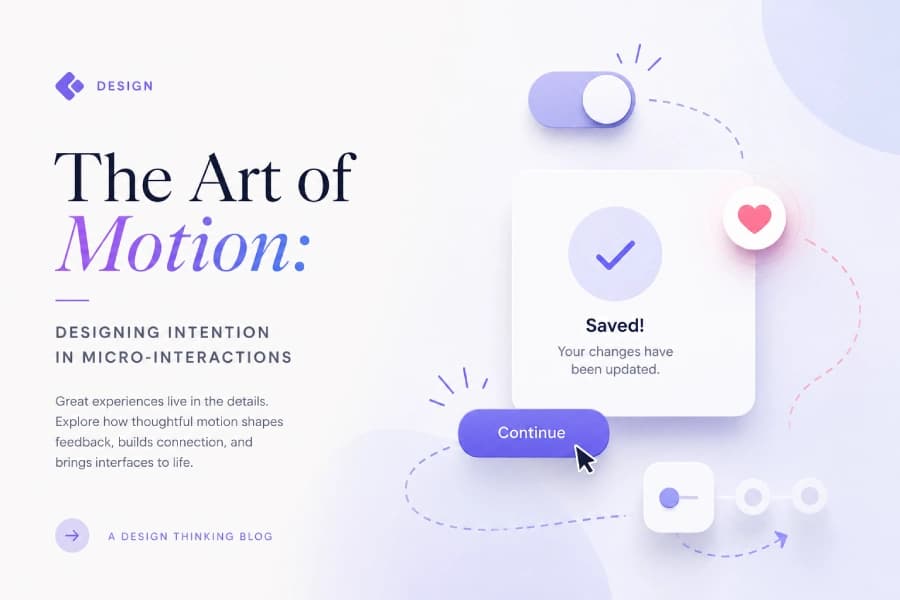
Motion design is the bridge between user intent and system response. When done right, it guides focus, creates spatial relationships, and provides instantaneous feedback.
The Core Principle of Intention
Every animation must serve a purpose. We often see developers adding spring physics to every button just because the library makes it easy. But visual fatigue is real. Motion should be reserved to draw attention to state changes—like a form submitting, an error appearing, or a modal entering the view.
"Good design is obvious. Great design is transparent. The best motion design feels like it was never there at all."
Spatial Memory and Navigation
Consider the mobile pattern of a side drawer. When you tap a hamburger menu and the drawer slides in from the left, it establishes spatial memory. The user intuitively knows that to close it, they swipe left. If the drawer instead faded in instantly, that physical connection to the interface is lost.
Guidelines for Framer Motion
- Keep it swift: Transitions should rarely exceed 300ms for micro-interactions.
- Ease out for entry: Elements entering the screen should slow down as they arrive (Ease-Out).
- Ease in for exit: Elements leaving should accelerate as they depart (Ease-In).